

You stand in front of the mirror on a rushed Tuesday morning, splash some water on your face, maybe swipe on a bit of moisturizer — and hope for the best. Sound familiar?
Most of us grew up with nobody sitting us down to explain proper skincare routine steps. So we wing it. We copy what our friend uses, grab whatever’s on sale, or follow a random TikTok trend — and then wonder why our skin still looks dull, uneven, or just… tired.
Here’s the thing: your skin doesn’t need a 20-step routine or a $400 serum. It needs the right steps, done in the right order, with a little consistency. That’s it.
This article walks you through 7 essential skincare routine steps that many women find genuinely helpful — not to sell you a dream, but to help you understand what your skin may actually benefit from.
Why Your Skincare Routine Steps Actually Matter
Have you ever applied a great product and noticed… nothing? Weeks pass, and your skin looks exactly the same.
Sometimes the problem isn’t the product — it’s the order. Skin absorbs active ingredients best when applied in a specific sequence, from lightest to heaviest texture. Skipping steps or layering products incorrectly can actually prevent them from working properly.
Think of your skin like a sponge. When it’s well-prepped — clean, slightly damp, balanced — it absorbs what you give it. When it’s not, even the most expensive serum just sits on the surface.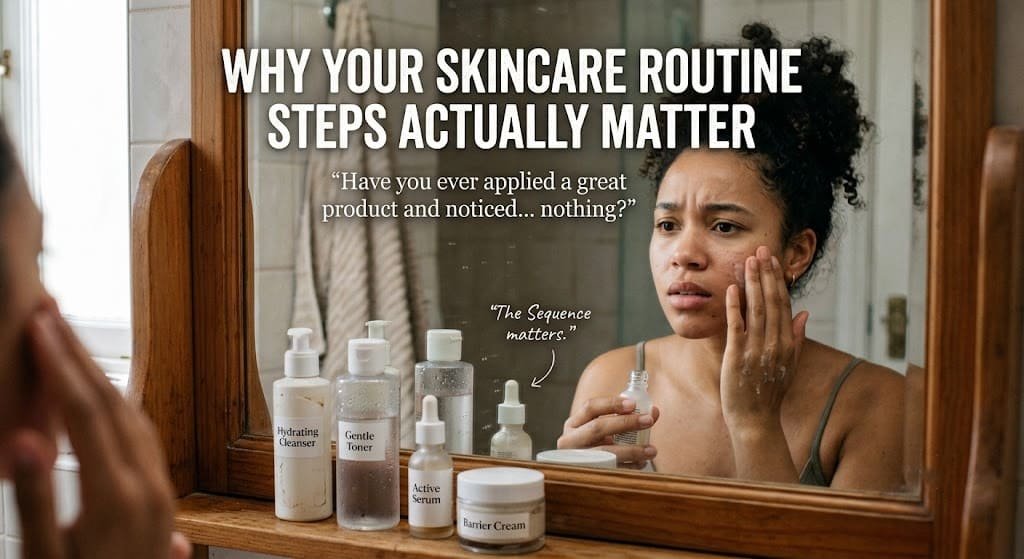
Step 1 — Cleanse: Start With a Clean Slate
The First (and Most Critical) of All Skincare Routine Steps
Every effective skincare routine steps guide starts here — and for good reason. Throughout the day (and night), your skin collects pollution, excess oil, sweat, and makeup residue. Sleeping with all of that on your face is one of the fastest ways to invite breakouts and dullness.
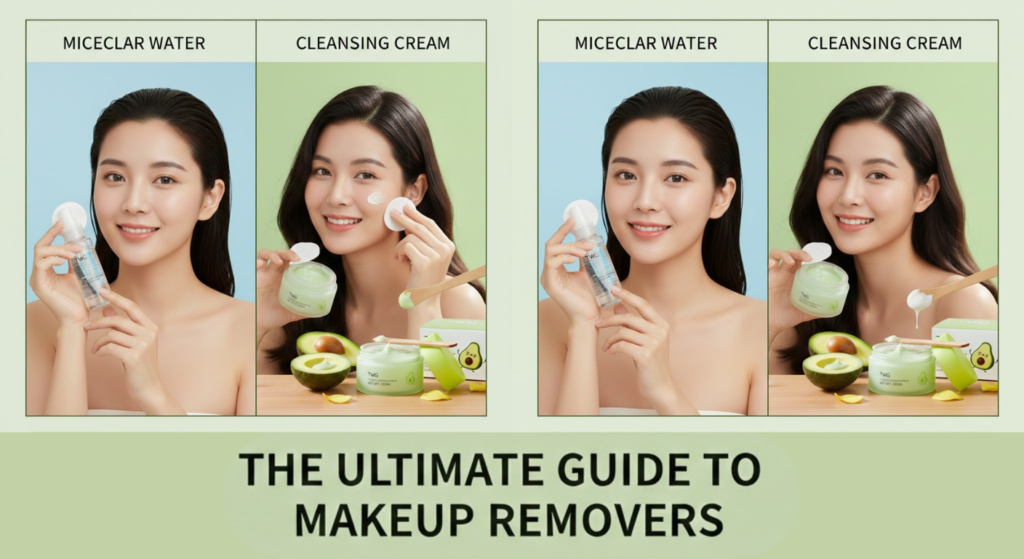
Use a gentle, pH-balanced cleanser suited to your skin type. Dry skin tends to love creamy or oil-based cleansers. Oily or acne-prone skin may do well with a foaming or gel formula. And if you wear makeup, double cleansing — first with an oil or micellar water, then with a gentle wash — can make a noticeable difference.
A quick tip many women find helpful: rinse with lukewarm water, not hot. Hot water can strip the skin’s natural moisture barrier, leaving it tight and reactive.
Step 2 — Exfoliate: But Not Every Day
Exfoliation is one of those skincare routine steps that gets either over-done or completely forgotten. Your skin naturally sheds dead cells every 28–40 days, but as we get older, that process slows down. Dead skin cells can accumulate, leaving your complexion looking flat and your pores appearing larger.
Gentle chemical exfoliants — like AHAs (glycolic or lactic acid) or BHAs (salicylic acid) — may help with cell turnover without the irritation physical scrubs can sometimes cause. Many women find that 2–3 times a week is enough. More than that can disrupt your skin barrier.
What if your skin could feel smoother, look brighter, and absorb your other products better — just from this one step? That’s what consistent, gentle exfoliation may support over time.
Step 3 — Tone: The Step Most Women Skip
Toners have a bit of a reputation problem. Old-school formulas were often alcohol-heavy and stripped the skin. Modern toners are a completely different story — and they’re one of the most underrated skincare routine steps out there.
A good toner today can help rebalance your skin’s pH after cleansing, prep it to absorb serums better, and deliver a first layer of hydration. Look for ingredients like hyaluronic acid, niacinamide, or centella asiatica, depending on what your skin needs.
Think of toner as the bridge between cleansing and treatment. Without it, the gap between those two steps can leave your skin slightly off-balance.
Step 4 — Serum: Your Skin’s Best Friend
The Heart of Any Skincare Routine Steps Plan
If any single step in your routine is where targeted skincare happens, it’s here. Serums are concentrated formulas packed with active ingredients — and they’re designed to penetrate deeper than a moisturizer can.
Feeling dehydrated? Try a hyaluronic acid serum. Dealing with dark spots or uneven tone? Vitamin C is widely loved for that. Concerned about fine lines? Retinol (used at night) is one of the most researched ingredients in skincare.
One thing to keep in mind: less is more with serums. A pea-sized amount — maybe two — is usually plenty. And you don’t need to layer five different ones. Pick one or two that target your main concern and use them consistently.
Step 5 — Eye Cream: Small Area, Big Difference
The skin around your eyes is thinner and more delicate than the rest of your face — it often shows signs of fatigue, stress, and aging first. Have you ever struggled with persistent puffiness in the morning or the kind of under-eye circles that concealer just can’t seem to cover?
Eye creams are specifically formulated for this sensitive area. They tend to be gentler and more targeted than regular moisturizers. Caffeine-based formulas are popular for puffiness. Peptide-rich ones may support firmness over time. Applying with your ring finger (the weakest finger) and tapping — not rubbing — is a technique many skincare professionals recommend.
You don’t need to start this step at 40. Many women in their 20s and 30s find that preventative care makes a difference as they age.
Step 6 — Moisturize: Lock In the Good Stuff
Even oily skin needs moisture — this is one of the biggest skincare misconceptions out there. When you skip moisturizer because your skin feels oily, it can actually overproduce oil to compensate. A lightweight, non-comedogenic moisturizer can help keep things balanced.
Your moisturizer’s job is to seal in everything you’ve applied before it — think of it as the finishing layer that keeps hydration from evaporating. Look for ingredients like ceramides, glycerin, or squalane to support your skin barrier.
For most skin types, a lighter gel or lotion works well in the morning. At night, a richer cream can give your skin the extra nourishment it needs during its natural repair cycle.
Step 7 — SPF: The One Skincare Routine Step You Should Never Skip
If there is one step in this entire list that dermatologists unanimously agree on, it’s this one. Sun exposure is one of the leading contributors to premature skin aging, dark spots, and uneven texture — and most of it happens during ordinary daily activities, not just beach days.
SPF 30 or higher, applied every morning (yes, even on cloudy days, yes, even when you’re mostly indoors), can make a meaningful difference in how your skin ages over time. Many women who’ve been consistent with SPF for years notice significantly fewer fine lines and more even-toned skin compared to when they weren’t.
Modern sunscreens have come a long way. Many now double as primers, offer hydration, and don’t leave that dreaded white cast. Finding one you actually enjoy wearing makes it much easier to stay consistent.
For more on sun protection, the American Academy of Dermatology offers helpful, evidence-based guidance at aad.org
How to Build Your Personalized Skincare Routine Steps Plan
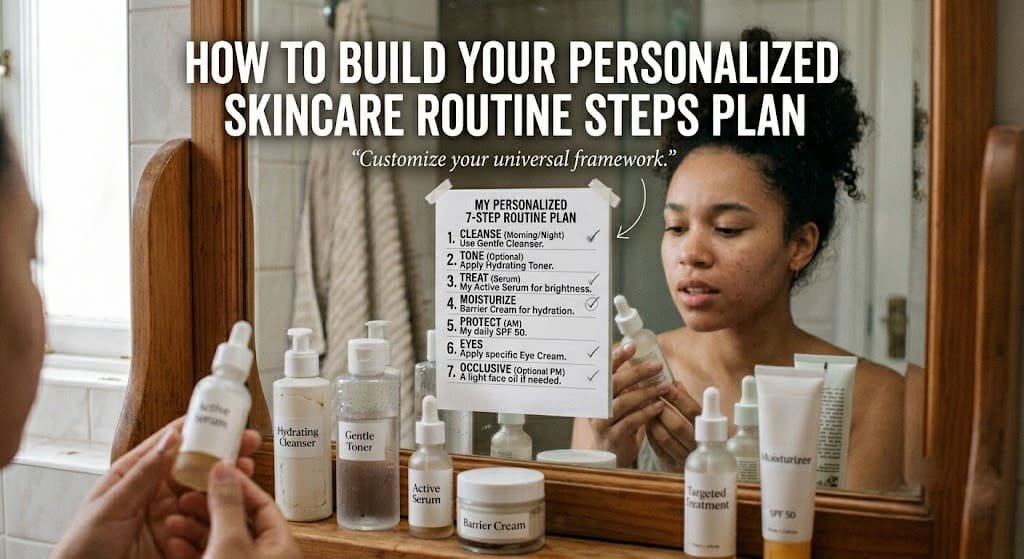 Every woman’s skin is different — and what works for your colleague or your sister might not work for you. But the framework of these 7 skincare routine steps applies universally. You customize within it.
A simple way to start:
- Begin with just cleanse + moisturize + SPF. That’s it. Build from there.
- Add one new product at a time so you can identify what works (and what doesn’t).
- Give each new product 4–6 weeks before deciding if it’s making a difference.
- Listen to your skin. Redness, tightness, or breakouts after starting something new are signals worth paying attention to.
- If you have a specific concern — persistent acne, rosacea, melasma — consider consulting a dermatologist for personalized guidance.
Final Thoughts
Skincare isn’t about chasing perfection. It’s about showing up for yourself, consistently, with kindness — and giving your skin what it actually needs.
These 7 skincare routine steps aren’t a magic formula. They’re a framework — a reliable, research-informed starting point that many women find genuinely helpful when practiced with patience.
Your skin tells the story of how you’ve cared for it. And it’s never too late — or too early — to start writing a better chapter.
Pick one step you’ve been skipping. Start there. Your future self will thank you.