
That invisible, throbbing lump buried beneath your skin — the one you can feel but not see, and cannot leave alone — deserves more than a panicked squeeze. It deserves a plan.
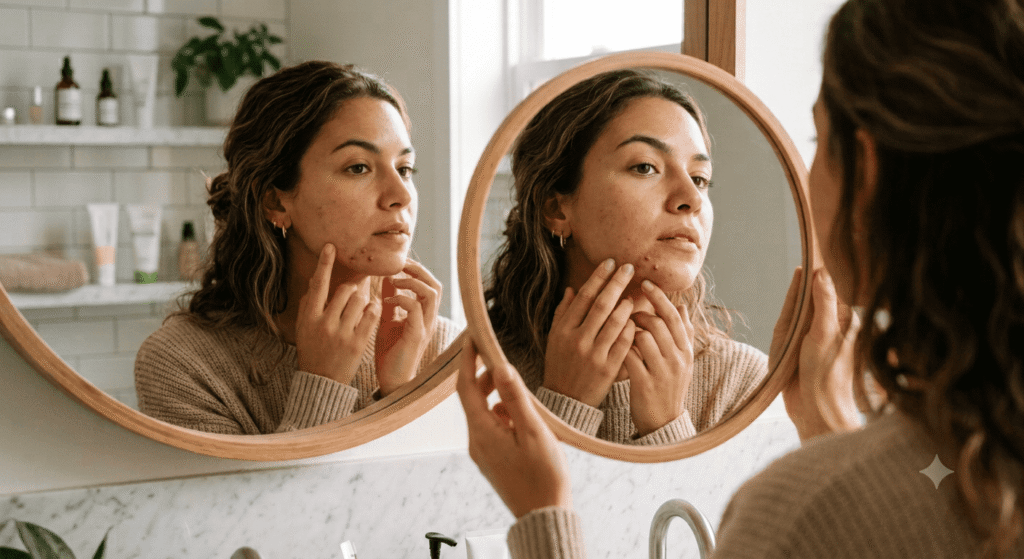
 You press your fingers to your chin and feel it before you see it — a dense, warm knot sitting somewhere just below the surface. You check the mirror: nothing there. But it’s there. You know it is. And now you can’t stop touching it.
Knowing how to treat a blind pimple under the skin — without turning a small annoyance into a painful, scarring ordeal — is one of those things nobody properly teaches us. We learn by doing, and unfortunately, “doing” usually means squeezing. And squeezing means regret.
This guide is the one you’ll wish you’d had the first time one appeared. Let’s handle this — calmly, gently, and with real results.
1. What Is a Blind Pimple — and Why Does It Hurt So Much?
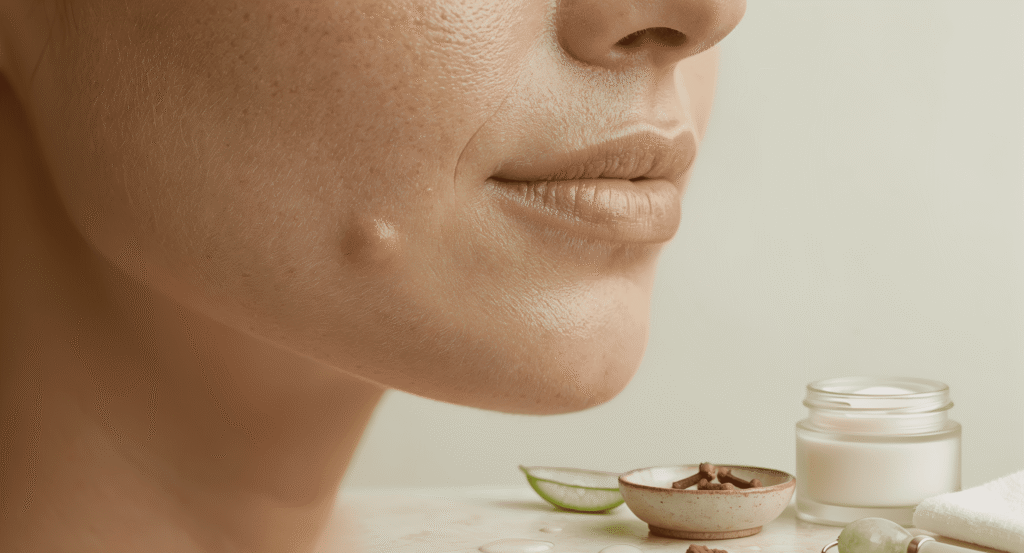
A blind pimple (sometimes called a closed comedone or a cystic nodule, depending on its depth) is a blemish that forms deep within the dermis — far below the surface — with no visible head or opening.
Because it’s buried, it has nowhere to go. The inflammation and pressure build inward, pressing on nerve endings. That’s why it throbs. That’s why it feels three times larger than it actually is. That’s why you wake up thinking about it.
There are two main types worth knowing:.[American Academy of Dermatology: How to treat different types of acne]
- Closed comedones— small, flesh-colored bumps caused by trapped oil and dead skin. Less painful, but stubbornly persistent.
- Cystic or nodular blind pimples— deep, inflamed, and often hormonal. These are the painful ones. They can last weeks and leave marks if mishandled.
2. The Single Most Important Rule: Hands Off
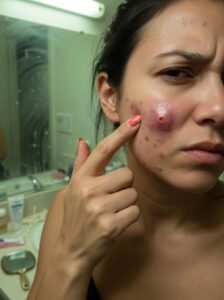 Before anything else — before we talk about ingredients or patches or routines — we need to talk about the urge.
You want to squeeze it. You want to poke at it, apply pressure from different angles, and use your fingernails “just to see.” Every woman who has ever had a blind pimple knows this feeling intimately.
“A blind pimple has no exit. Pressing it doesn’t help it leave — it pushes the inflammation deeper, widens the damage, and writes a scar into your skin that wasn’t there before.”
Squeezing a blind pimple before it has a visible head can rupture the follicle wall beneath the surface. That rupture spreads bacteria and inflammatory debris into surrounding tissue — turning one contained blemish into a wider, angrier problem.
Picking, pressing, or applying extreme heat to a blind pimple that has no head can cause permanent post-inflammatory hyperpigmentation (PIH) — the dark spots that linger for months after a breakout clears. The pimple fades in weeks. A scar can last a year.
3. Heat vs. Cold: Which One Actually Helps?
When to Use Warmth
A warm compress — not hot, never hot — gently increases circulation and may help soften the skin around a blind pimple, encouraging it to naturally migrate toward the surface over several days.
Dampen a soft cloth with warm (not scalding) water. Hold it gently against the area for 5–10 minutes, two to three times daily. No pressure. No friction. Just warmth.
When Cold Is Your Friend
If the area is acutely swollen, red, and throbbing — especially right after you’ve accidentally pressed it — cold is more appropriate. Wrap an ice cube in a clean cloth and hold it against the skin for 1–2 minutes. This reduces inflammation and temporarily calms the pain.
Use warmth in the morning to gently encourage the pimple’s progression, and cold in the evening if inflammation is peaking. Think of it as a two-step conversation with your skin — not a battle.
4. The Ingredients That Truly Work (And Those That Don’t)
Not every acne ingredient is built for the deep work a blind pimple requires. Surface-level exfoliants and pore-uncloggers won’t reach something buried that far beneath.
Ingredients Worth Reaching For
- Salicylic acid— oil-soluble and able to penetrate the pore lining, making it more effective for deep blockages than surface exfoliants like glycolic acid. A 2% BHA applied directly may help over several days.
- Benzoyl peroxide (2.5–5%)— targets the bacteria contributing to inflammation. Spot-applied at low concentrations, it can reduce the life of a blind pimple without excessive dryness.
- Sulfur— an underrated gem. It absorbs excess oil and calms inflammation gently, making it well-suited for sensitive, reactive skin that can’t tolerate stronger actives.
- Niacinamide— doesn’t treat the pimple directly, but it reduces redness and strengthens your barrier simultaneously, preventing the situation from worsening while the blemish resolves. .[PubMed: Salicylic acid treats acne vulgaris by suppressing pathways in sebocytes]
Ingredients to Avoid on a Blind Pimple
- Toothpaste— a persistent myth. Most modern formulas contain ingredients (SLS, fluoride, whitening agents) that irritate and inflame the skin significantly more than they help.
- Rubbing alcohol or acetone— strips the barrier, increases inflammation, and can cause lasting damage to surrounding healthy skin.
- High-strength exfoliant peels— 10–30% AHA concentrations used on an active, inflamed blind pimple can cause chemical burns in compromised tissue.
5. Hydrocolloid & Acne Patches: The Gentle Game-Changer
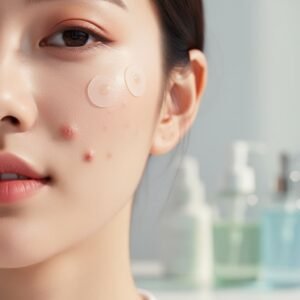 If there’s one modern skincare development that genuinely changed how we handle blind pimples, it’s the acne patch.
Hydrocolloid patches — originally designed for wound care — create a moist, bacteria-free environment over the skin. For a blind pimple with no visible head, they serve a different but equally valuable role: they physically prevent you from touching it, reduce inflammation through mild occlusion, and protect the area while your actives do their work underneath.
Some patches are now formulated with salicylic acid or microneedle technology designed specifically for deep blemishes. These can help deliver active ingredients below the surface — though results are gradual, not overnight.
Apply an acne patch before bed. You’ll prevent the unconscious nighttime picking, protect your skin’s healing cycle, and wake up to a calmer, sometimes visibly reduced blemish. Small wins add up to a clear result.
6. How to Adjust Your Routine While It Heals
A blind pimple is a signal that your skin is stressed. Piling on more actives in response — thinking you can “treat your way out of it faster” — often prolongs the problem.
What to Scale Back
- Mechanical exfoliation (scrubs, cleansing brushes) directly over the area — they spread bacteria and cause friction-induced trauma.
- Multiple active ingredients layered simultaneously — retinol on top of benzoyl peroxide on top of AHA is a recipe for a damaged barrier.
- Heavy, occlusive makeup pressed into the area — it seals in bacteria and slows the pimple’s natural resolution.
What to Prioritize
- A gentle, low-pH cleanser that removes surface impurities without stripping — twice daily, no more.
- A ceramide or peptide moisturizer to protect barrier integrity while the targeted treatment works underneath.
- SPF every single morning — UV exposure darkens post-inflammatory marks and extends their presence significantly.
7. Realistic Timeline: What to Expect Day by Day
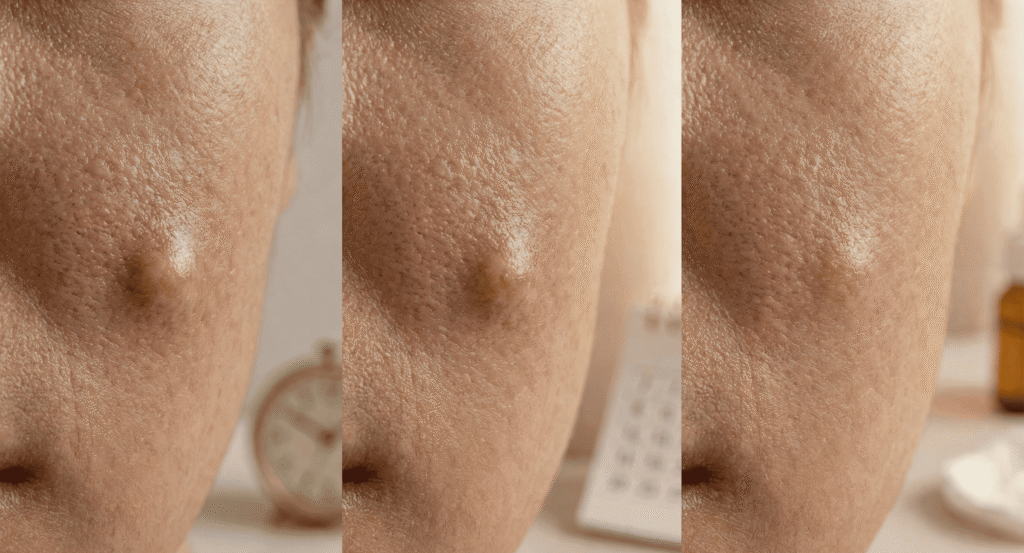 Managing expectations is a form of self-care. A blind pimple doesn’t disappear in 24 hours, and knowing this in advance prevents the desperate interventions that cause the most harm.
- Days 1–2:Focus purely on calming. Warm compress morning and evening. A spot treatment applied once daily. No picking. The pimple may feel larger as circulation increases — that’s not worsening, that’s healing movement.
- Days 3–5:Some blind pimples begin to migrate toward the surface. A small white or yellow head may start forming. Do not force it. If it appears naturally and forms a visible head, a very gentle extraction (with clean hands, minimal pressure, once only) becomes possible — but still optional.
- Days 5–10:Without interference, many blind pimples will reabsorb without surfacing at all — especially smaller ones. The bump diminishes, the tenderness fades. A flat, possibly pink patch may remain temporarily.
- Days 10–21:Any remaining discoloration will fade with consistent SPF and niacinamide use. Resist the urge to exfoliate aggressively to “speed it up” — this is where patience becomes the treatment.
◆ ◆ ◆
8. Ultimate Rituals to Treat & Prevent Blind Pimples
These eight practices work together — not as isolated fixes, but as a rhythm your skin can rely on.
The Warm Compress Ritual. Each morning, before applying anything, hold a warm damp cloth gently over the area for 5 minutes. No pressure, no scrubbing. Just warmth and patience. This is the most underrated step in the entire process.
Single-Ingredient Spot Treatment. Choose one targeted ingredient — not three. Apply it directly to the bump only. Less application area means less overall irritation and more concentrated results where you need them.
The Barrier-First Rule. Every time you’re tempted to add another active, apply your moisturizer first. A healthy barrier is what allows your treatments to actually work — a compromised one fights them.
The Overnight Patch Method. Place an acne patch (hydrocolloid or medicated) over the area before sleep. This prevents unconscious touching, reduces inflammation, and protects the area during your skin’s peak repair window.
SPF Without Negotiation. Apply broad-spectrum SPF 30–50 every morning, rain or shine. Post-inflammatory marks — the flat discoloration left after a blind pimple — are dramatically worsened and prolonged by UV exposure.
Stress Audit, Once a Week. Blind pimples cluster during high-stress periods. Carve out a weekly ritual — a bath, a walk, 10 minutes of quiet — that actively lowers cortisol. This is not optional self-indulgence. It is targeted skincare.
Cycle Awareness. Track when your blind pimples appear in relation to your cycle. Pre-period surges in androgens are one of the most common triggers. Knowing they’re coming lets you prep your skin — reduced actives, increased moisture, added gentleness — in advance.
The Two-Week Non-Touch Commitment. Commit — genuinely commit — to not touching the pimple for two full weeks. Place a reminder on your phone if needed. The single most transformative thing you can do for a blind pimple is give it time and space to resolve on its own terms..[International Journal of Women’s Dermatology: Female acne – A different subtype of acne?]
When to See a Dermatologist
Most blind pimples respond to consistent, gentle home care. But not all of them.
If your blind pimples are large, recurring in the same spots, deeply painful, and leaving lasting marks — or if you’re getting multiple at the same time — that pattern deserves professional attention, not just better products.
A board-certified dermatologist can assess whether underlying hormonal imbalance, an inflammatory skin condition, or another treatable factor is driving the cycle. Describing your pattern clearly — location, frequency, timing relative to your cycle — helps them understand what your skin is actually doing.
You don’t have to be in a skincare crisis to deserve a conversation. Showing up before it becomes a crisis is, honestly, the most powerful thing you can do.
Your Skin Doesn’t Need a Fight.
It Needs a Friend.That blind pimple will pass. It always does. What you do — or don’t do — in the days between feeling it and seeing it go, is what determines whether it leaves quietly or leaves a mark.
Choose the warm compress over the fingernails. Choose the patch over the mirror spiral. Choose the two-week commitment over the two-minute panic.
Your skin is trying its best. So are you.
♥ You Might Also Love
→ Advanced Glow: 7 Stunning Fruit Acid Peeling Gel Benefits That Transform Dull Skin
→ Avoid the Damage: 5 Sneaky Skincare Mistakes That Are Silently Destroying Your Skin Every Day
→ Complete Handbook: The Ultimate Beginner’s Guide to Skincare: Brighten, Repair & Firm
→ Beauty on the Go: The 3 Ultimate Skincare Travel Sets for Effortless Beauty