
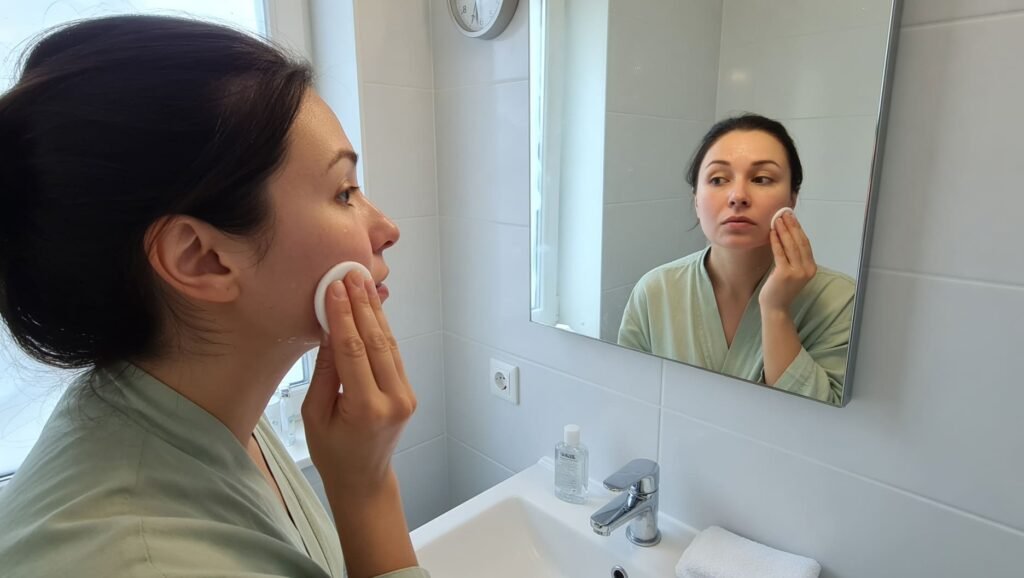
Face Gets Oily 2 Hours After Washing? 7 Secret Reasons Your Skin Is Sending You a Message
A compassionate, expert-backed look at why rebound oiliness happens — and what your skin is really trying to tell you.
Table of Contents
ToggleThe Moment You Recognize the Pattern
You wash your face. You pat it dry. You look in the mirror and think — finally. Clear, matte, fresh.
Then two hours later, you catch your reflection and there it is again: the shine. The slick T-zone. The feeling that your face has already undone everything you just did.
If your face gets oily 2 hours after washing, you are not alone — and more importantly, you are not doing anything wrong. What you’re experiencing has a name, a cause, and a solution that has nothing to do with washing your face more often.
Let’s talk about what’s really happening.
What Sebum Actually Is (And Why It’s Not the Enemy)
Your skin produces an oily substance called sebum through tiny glands beneath every pore. Sebum is not a flaw. It’s your skin’s built-in moisturizer, antibacterial shield, and barrier
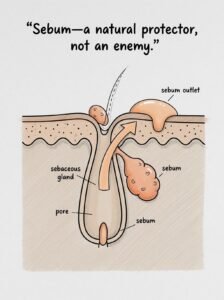
protector — all rolled into one.
The problem isn’t that your body makes it. The problem is when it makes too much of it, too fast.[American Academy of Dermatology: Everything You Need To Know About Sebum]
And the reason for that overproduction? Almost always something in your routine — not your skin type — is triggering it.
Reason 01
You’re Over-Cleansing Your Skin
Washing your face morning, night, and “just once more at lunch” feels productive. But every time you cleanse, you strip away the skin’s natural oils. Your sebaceous glands register this as an emergency — and immediately produce more oil to compensate.
It’s called reactive sebum production, and it’s one of the most common causes of that frustrating two-hour oil cycle. The fix? Cleanse once in the evening. A simple water rinse in the morning is often enough for most skin types.
Reason 02
Your Cleanser Is Too Harsh
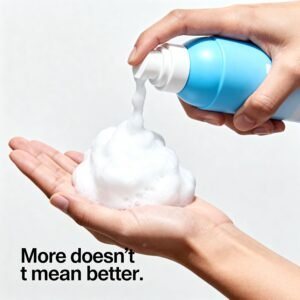
That squeaky-clean feeling after washing? It’s not a good sign. Squeaky skin means your cleanser has stripped the skin’s lipid barrier — and your skin is scrambling to rebuild it, fast.
Look for sulfate-free, pH-balanced cleansers with ingredients like glycerin or ceramides. Harsh foaming cleansers feel satisfying in the moment but leave your barrier compromised for hours.[PubMed: Barrier Disruption and Sebum Rebound Caused by Harsh Cleansers]
Reason 03
You’re Skipping Moisturizer
Here’s the counterintuitive truth that changes everything for most oily-skin women: skipping moisturizer makes you oilier.
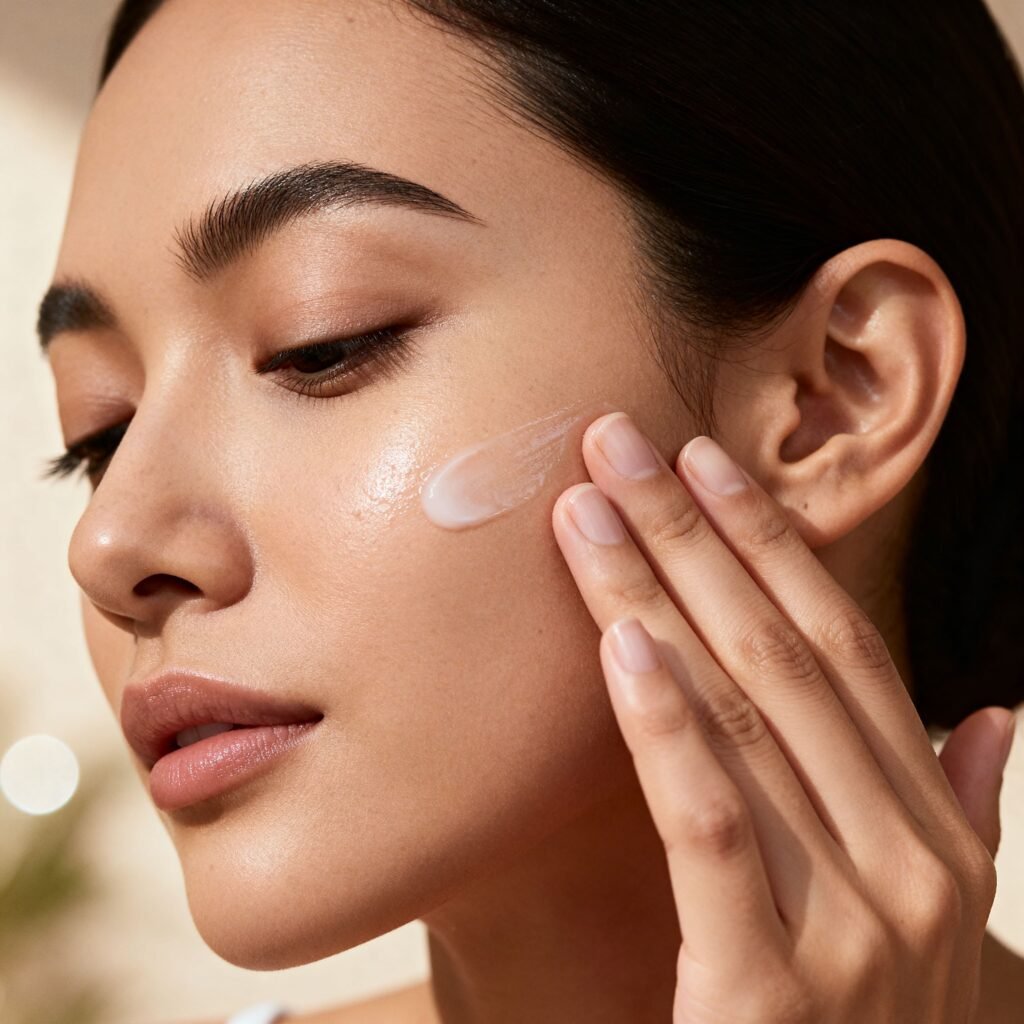
When your skin doesn’t receive external moisture, it produces its own — via sebum. A lightweight, oil-free moisturizer signals to your skin that it’s already hydrated. Sebum production slows down. The shine follows.
Reason 04
Your Skin Is Dehydrated — Not Oily
Oily skin and dehydrated skin are not opposites. They coexist more often than you’d think.
Dehydrated skin lacks water (not oil) — and compensates by overproducing sebum to protect itself. If your skin feels tight and shiny at the same time, dehydration is likely the root cause. Adding a hydrating toner or serum with hyaluronic acid can rebalance everything within two to three weeks.

Reason 05
Hormones Are Running the Show
Androgens — particularly testosterone — directly stimulate your sebaceous glands. This is why oiliness often surges around ovulation, before a period, during puberty, or when you’re under stress (cortisol amplifies androgens).
If your oiliness follows a clear monthly rhythm, hormones may be the primary driver rather than your routine. Gentle adaptogens like spearmint tea have shown promise in small studies, but a conversation with your doctor is the best starting point.[Dermatology Research and Practice: Androgens and Sebaceous Gland Function]

Reason 06
Your Environment Is Working Against You
Humidity, heat, and pollution all increase sebum production. If you live somewhere warm and humid — or you’re going into a heated indoor space in winter — your skin’s sebaceous activity naturally increases.
This isn’t something you can fight with more cleanser. It’s something you manage with lightweight, non-comedogenic products and realistic expectations about shine.
Reason 07
Your Routine Has Too Many Active Steps
Retinol, vitamin C, AHAs, BHAs, niacinamide — layering too many actives can inflame and destabilize your barrier. An irritated barrier triggers oil production as a defense mechanism.
Less is genuinely more for reactive, oily skin. A stripped-back routine with one or two well-chosen actives often outperforms a ten-step regimen.
The Ritual Reset That Actually Works
Once you understand why your face gets oily 2 hours after washing, the solution becomes less about fighting your skin and more about cooperating with it.

Rinse with cool water only. Apply a lightweight niacinamide moisturizer. SPF always — even on oily skin days.
One gentle sulfate-free cleanse. Hydrating toner. One targeted active (not three). A barrier-supporting moisturizer.
Blotting papers over powder touch-ups. Hyaluronic acid before oil-free moisturizer. Stay hydrated from within.
One exfoliation session max. A clay mask once a week, applied only to the T-zone — never all over.
Ingredients worth adding to your shelf:
- Niacinamide (2–5%) — regulates sebum production and minimizes pores over time
- Hyaluronic acid — draws water into the skin, reducing the dehydration-oiliness cycle
- Centella asiatica — calms an inflamed, reactive barrier
- Zinc PCA — naturally oil-controlling without stripping the skin
- Ceramides — rebuilds and reinforces the lipid barrier. [Cosmetics Info: Skincare Ingredient Safety and Science]
A Note on Patience & Self-Compassion
Skin doesn’t transform overnight. When you start cooperating with your barrier instead of stripping it, most people see a meaningful change within four to six weeks. Some see it sooner.
What changes first is usually not the oil — it’s your relationship with your skin. You stop fighting it. You start listening to it.
And that shift? That’s the beginning of every good skin journey.
Remember: For persistent skin concerns or medical conditions, always consult a licensed dermatologist.
♥ Continue Your Journey to Radiant Skin
If you enjoyed learning about this, you’ll find these curated guides essential for your 2026 beauty ritual:
- Best Travel Skincare Sets: 5 Radiant Modular Swaps That Finally Work For Your Skin
- 5 Best Ways to Remove Waterproof Makeup Without Dryness or Irritation — Your Ultimate 2026 Skin-First Guide
- 5 Radiant Reasons the Ultimate Rice Puree Travel Kit Is Your Carry-On Skincare Hero
- Best Travel Skincare Sets: 5 Radiant Modular Swaps That Finally Work For Your Skin
- Dark Circles: 5 Shocking Night Habits Sabotaging Your Brightest Eyes (Fix Them in 7 Days)
- Sakura Skin Care Set: 7 Powerful Secrets for Glowing, Confident Skin in Just Days