
You open Instagram and suddenly there are 12 products, a jade roller, a fridge for your serums, and someone with poreless skin telling you it’s all “so easy.” And you’re standing in the bathroom holding a moisturiser you bought three months ago wondering… where do I even start?
Here’s the truth nobody says out loud: a simple skincare routine for beginners built on three well-chosen steps will do more for your skin than a complicated 10-step routine you never stick to.
This guide is your gentle starting point. No overwhelm. No guilt. Just a clear, honest path to skin that feels genuinely cared for.
Why Simple Is Actually the Smartest Place to Start
 When you layer too many new products at once, your skin doesn’t know what’s working and what’s causing that sudden breakout or that dry patch. More products equals more variables, more potential reactions, and — honestly — more money spent on things that sit half-used on your shelf.
Dermatologists and skincare researchers consistently point to the same foundational principle: a healthy skin barrier is the goal, and simplicity protects it. A stripped-back, consistent routine teaches you your own skin before you add anything extra.
Getting to Know Your Skin First
Before you buy anything, take one week to just… observe. Wash your face with water only, pat dry, and wait 30 minutes. What does your skin do?
- Feels tight and looks dull? Likely dry or dehydrated skin.
- Shiny all over by midday? You probably have oily skin.
- Shiny T-zone but dry cheeks? Classic combination skin.
- Easily turns red or stings? Your skin is on the sensitive side.
- Feels comfortable and balanced? Lucky you — that’s normal skin.
This small act of noticing is already skincare. It’s you choosing to pay attention to yourself, and that matters.
Your 3-Step Routine
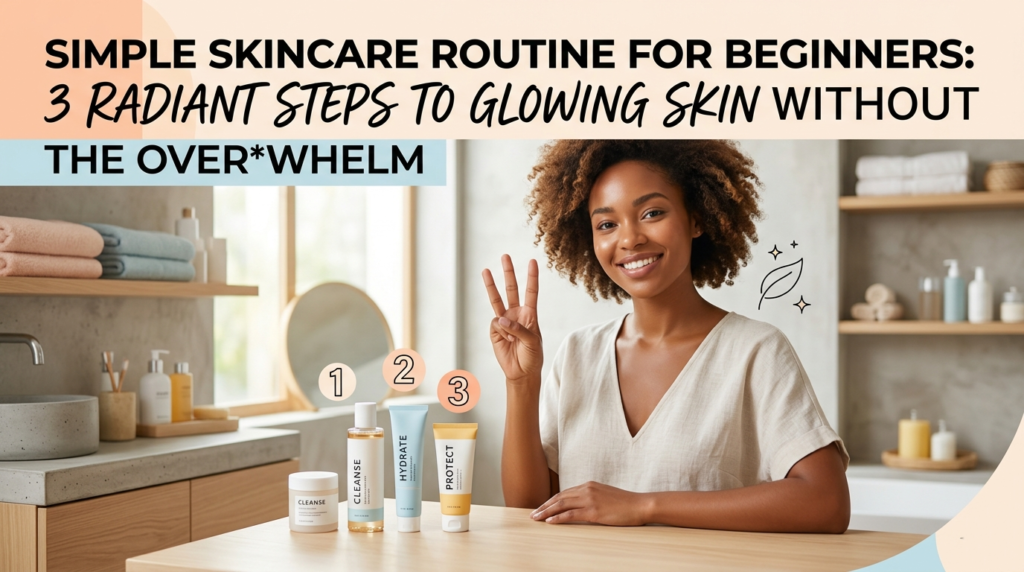
Cleanser · Moisturiser · SPF — morning and night, adapted.
⇒ Step 1
Cleanse — Your Skin’s Daily Reset Button
Think of cleansing as closing the day’s tabs. Pollution, oil, makeup, stress hormones sitting on your skin — gone. But how you cleanse matters as much as that you cleanse at all.
The number one beginner mistake? Over-cleansing with a formula that’s too harsh. If your skin feels squeaky-clean and tight after washing, that’s not freshness — that’s your cleansing and skin barrier crying a little.
What to look for in a beginner cleanser
- Gel cleansers — great for oily or acne-prone skin; remove excess sebum without stripping.

- Cream or milk cleansers — a dream for dry, sensitive, or dehydrated skin types.
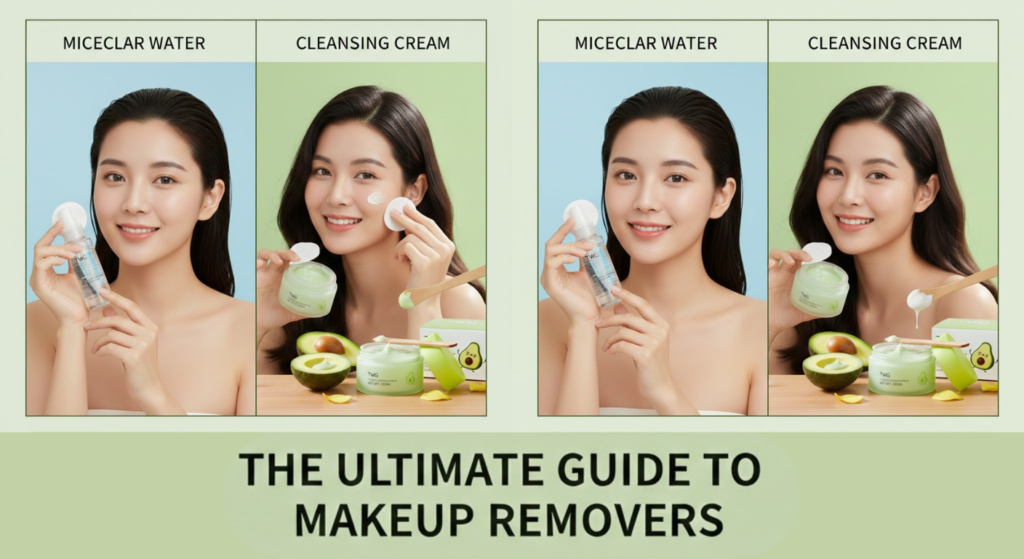
- Micellar water — a gentle, rinse-free option if your skin reacts to almost everything.
- Avoid: Anything with sodium lauryl sulfate (SLS) or heavy fragrance if you’re sensitive.
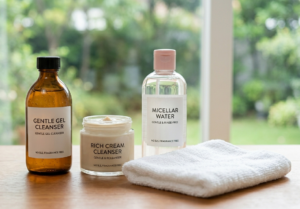
How to use it: Lukewarm water, 30–60 seconds of gentle circular massage, rinse fully, and pat — never rub — dry with a clean towel.
♦ Real Talk
If you wear makeup or SPF, a double cleanse at night (a cleansing oil or balm first, then your regular cleanser) makes a world of difference. You don’t need to double-cleanse in the morning — splash and go is perfectly fine.
⇒Step 2
Moisturise — The Hug Your Skin Has Been Waiting For
Even oily skin needs moisture. Let that one settle in for a second.
Skipping moisturiser because your skin is “already oily” is one of the most common beginner myths — and it often leads to more oil production as your skin overcompensates for the dehydration. All skin types benefit from hydration and barrier repair – The secret is matching the texture to your skin type.
Choosing your moisturiser by skin type
- Dry skin — Rich creams with ceramides, shea butter, or hyaluronic acid. Apply while skin is still slightly damp.
- Oily skin — Lightweight, oil-free gel moisturisers. They hydrate without adding shine.
- Combination skin — A balanced lotion. You can even apply a lighter formula to the T-zone and a richer one to dry areas.
- Sensitive skin — Fragrance-free, minimalist ingredient lists. Fewer ingredients means fewer chances for irritation.
Apply your moisturiser while your skin is still a little warm from cleansing — it locks in that residual hydration and just feels so good.
⇒Step 3
SPF — The One You Absolutely Cannot Skip
If a dermatologist could prescribe one non-negotiable habit, this would be it. Daily sun protection is the single most evidence-backed step for long-term healthy, even-toned skin.
UV rays don’t clock off on cloudy days or when you’re working indoors near a window. Daily UV protection and skin health protects against premature dark spots, uneven texture, and the kind of long-term skin changes no serum can reverse.
SPF made simple for beginners
- Minimum SPF 30 for daily use; SPF 50 if you’re outdoors a lot.
- Mineral SPF (zinc oxide, titanium dioxide) — gentler for sensitive and acne-prone skin.
- Chemical SPF — lighter texture, easier to blend under makeup.
- Reapply every two hours if you’re in direct sun.
♦ Gentle Reminder
SPF is a morning step only. At night, skip it — your skin is in repair mode and doesn’t need UV protection in the dark.
Morning vs. Night: Knowing When to Do What
Your routine doesn’t have to be identical twice a day. Here’s how to adapt it simply:
Morning Routine
- Gentle cleanse (or just rinse with water if your skin is dry)
- Moisturiser
- SPF — always last, always
Night Routine
- Double cleanse if you wore SPF or makeup; single cleanse if not
- Moisturiser — you can go slightly richer at night
- No SPF needed — this is your skin’s repair window
That’s it. Seriously. Two to three minutes in the morning, three to five at night. You’ve got this.
Mistakes That Quietly Wreck Your Skin Barrier
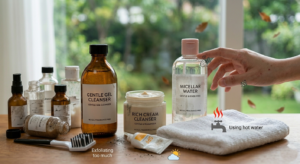 Learning a simple skincare routine for beginners also means learning what not to do. These are the subtle habits that undermine everything:
- Changing products too often. Give any new product at least 4–6 weeks before judging it. Skin turnover takes time.
- Exfoliating too much. Once or twice a week is plenty — daily scrubbing disrupts your barrier faster than almost anything else.
- Skipping SPF on “cloudy” days. Up to 80% of UV rays pass through cloud cover.
- Using hot water. It strips natural oils. Lukewarm is the sweet spot.
- Touching your face constantly. Hands carry bacteria, oils, and environmental debris straight onto your skin.
The Glow Journal Method
Here’s a small, joyful habit that transforms your skincare from a chore into a ritual: keep a glow journal.
For the first 30 days of your new routine, spend 60 seconds each morning noting how your skin feels. Tight? Soft? Breaking out? Glowing? No product review, no influencer recommendation can tell you what your own skin is doing in real time.
This practice builds skin literacy — and it’s deeply satisfying. By week four, you’ll know more about your skin than any algorithm does.
♦ Try This Tonight
Take a photo of your bare skin before you start your routine. No filter, no lighting tricks — just honest skin. Keep it somewhere private. In 30 days, take another. You’ll see the story your consistency is writing.
When You’re Ready for More
Once your simple skincare routine for beginners has become second nature — maybe after four to six weeks of consistency — you might naturally start wondering about serums, exfoliants, or targeted treatments.
That curiosity is healthy. But add one product at a time, spaced two to three weeks apart. That way, you’ll always know what’s working.
Some popular next-steps for beginners who’ve nailed the basics:
- Vitamin C serum (morning) — for brightening and antioxidant protection.
- Niacinamide — balances oil, minimises pores, calms redness.
- AHA/BHA exfoliant (1–2x weekly at night) — removes dead skin cells gently.
- Retinol — a longer-term addition, worth researching when you’re ready for an anti-ageing step.
But none of those matter until your foundation is solid. Start with three. Master three. Then dream of four.
“Healthy skin isn’t a destination.
It’s a conversation you have with yourself every single day.”
You don’t need 12 products to have beautiful skin. You need three good ones, used consistently, with a little patience and a lot of self-compassion.
Every “glow day” you’ll eventually have — the one where your skin just feels right, where you catch yourself smiling in the mirror — is built on quiet, unglamorous Tuesday evenings where you showed up for yourself anyway.
Start there. Start simple. Your skin will thank you.
♥ Continue Your Journey to Radiant Skin
If you enjoyed learning about this, you’ll find these curated guides essential for your 2026 beauty ritual:
| Article Title | Category | Quick Preview |
| Best Travel Skincare Sets: 5 Radiant Modular Swaps That Finally Work For Your Skin | Travel Skincare | Say goodbye to post-flight breakouts with these modular essentials. |
| 5 Best Ways to Remove Waterproof Makeup Without Dryness or Irritation — Your Ultimate 2026 Skin-First Guide | Sensitive Skin | Deep cleansing that respects your skin’s natural barrier. |
| 5 Radiant Reasons the Ultimate Rice Puree Travel Kit Is Your Carry-On Skincare Hero | Dry Skin | The secret to maintaining a glowing complexion at 30,000 feet. |
| Best Travel Skincare Sets: 5 Radiant Modular Swaps That Finally Work For Your Skin | Anti-Aging | Are your habits sabotaging your cells? Learn how to fix it today. |
| Dark Circles: 5 Shocking Night Habits Sabotaging Your Brightest Eyes (Fix Them in 7 Days) | Eye Care | A proven 7-day plan to restore brightness and banish fatigue. |
| Sakura Skin Care Set: 7 Powerful Secrets for Glowing, Confident Skin in Just Days | Skincare | Unlock the ancient power of Cherry Blossoms for a modern glow. |