
You know that feeling after a clay mask when your skin looks so matte it could double as a chalkboard?
Yeah. We need to talk about that.
For years, the beauty world sold us a lie: if your skin is oily, punish it. Scrub harder. Dry it out. Strip everything away and call it “clean.”
The truth? That approach often makes oiliness worse — and it leaves your skin barrier quietly screaming.
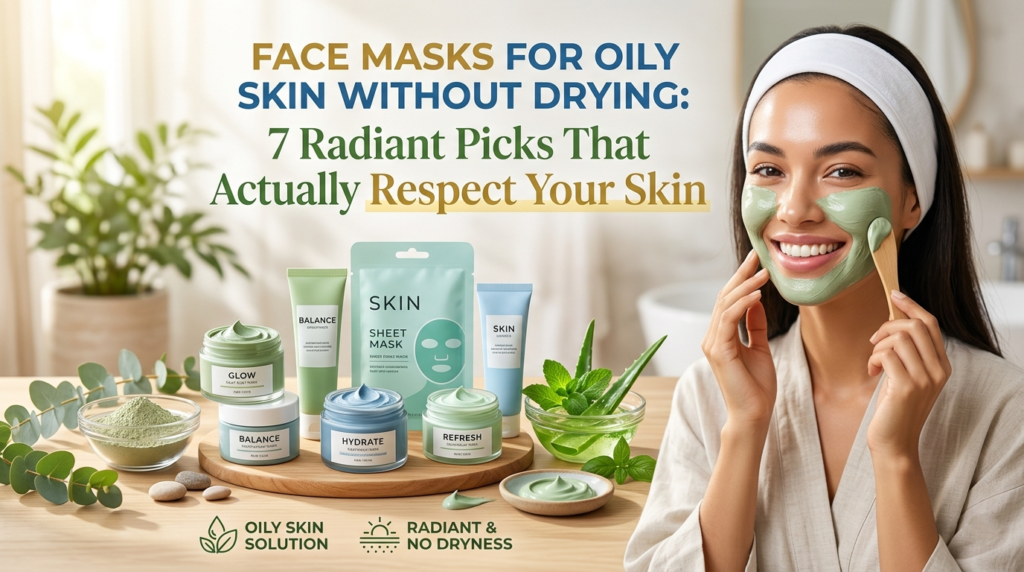
Using the right face masks for oily skin without drying is a total game-changer. Not because they perform miracles, but because they finally work with your skin instead of against it.
Let’s get into it.
Why Oily Skin Still Needs Moisture (Yes, Really)
 This is the part that surprises most people.
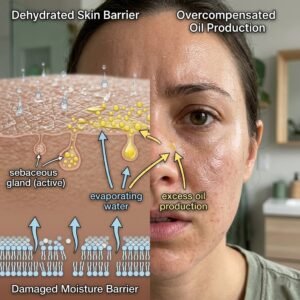
Oily skin and dehydrated skin are not opposites — they can absolutely coexist. When your skin loses too much water (from harsh masks, over-cleansing, or stripping actives), your sebaceous glands panic and produce more oil to compensate.“American Academy of Dermatology: How to control oily skin“
So that “greasy by noon” feeling? It might actually be a cry for hydration.
Your moisture barrier — that thin, invisible shield made of lipids and proteins — is the gatekeeper of healthy skin. Damage it, and every other product you use becomes less effective. Breakouts get worse. Sensitivity creeps in.
The goal with oily skin isn’t to eliminate oil. It’s to balance it.
What to Look for in a Face Mask for Oily Skin
Before we get to specific picks, let’s talk ingredients — because reading a label shouldn’t feel like decoding a chemistry textbook.
Look for:
- Kaolin or bentonite clay — absorbs excess sebum without stripping moisture when used in balanced formulas
- Niacinamide — regulates oil production and visibly minimizes pores over time (PubMed: The effect of 2% niacinamide on facial sebum production)
- Hyaluronic acid — draws water into the skin, preventing that tight post-mask feeling
- Salicylic acid (low concentration) — gently unclogs pores without over-drying
- Zinc — naturally calms oil glands and soothes inflammation
- Aloe vera — lightweight, soothing, and deeply hydrating without clogging pores
Avoid when possible:
- High concentrations of alcohol (listed as denatured alcohol or alcohol denat.)
- Fragrance-heavy formulas that can irritate a compromised barrier
- Masks that set “hard as cement” — these almost always over-strip
7 Best Face Masks for Oily Skin Without Drying
 1. The Classic Clay — But Smarter
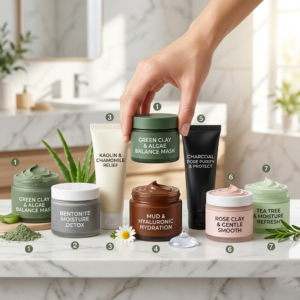 1. The Classic Clay — But Smarter
Clay masks have earned their reputation for a reason. But the key is choosing one where clay is balanced with hydrating ingredients.
Look for formulas that combine kaolin clay with glycerin or hyaluronic acid. This combo draws out impurities while holding water in the skin — so you get shine control without the post-mask tightness.
Best for: Weekly deep-pore cleansing, pre-event skin prep How to use: Apply a thin layer (not a thick slab), leave on 8–10 minutes max, rinse while still slightly damp
2. The Overnight Sleeping Mask
Sleeping masks aren’t just for dry skin — in fact, a lightweight gel sleeping mask can be one of the best tools in an oily skin routine.
These work overnight to repair your barrier, regulate water loss, and let actives like niacinamide do their thing while you rest.
Best for: Skin that feels both oily and tight — the classic combo of dehydrated-oily skin How to use: Apply as the last step in your evening routine, 2–3 nights per week
3. The Charcoal Purifying Mask
Activated charcoal acts like a magnet for pore-clogging debris. [International Journal of Cosmetic Science: Characteristics of Charcoal in Skin Cleansing] When it’s paired with soothing botanicals — think green tea extract or centella asiatica — you get a genuinely purifying experience that doesn’t leave skin raw.
Best for: Congested T-zones, post-workout skin, pre-period breakout prevention How to use: Focus application on oily zones; skip delicate eye area and jawline if dry
4. The Exfoliating Enzyme Mask
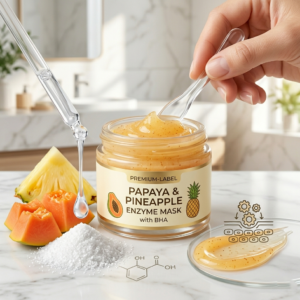 If physical scrubs feel too harsh for your skin (they often are), enzyme masks are your answer.
Papaya or pineapple-derived enzymes dissolve dead skin cells gently — no friction, no micro-tears. Combined with BHA (salicylic acid) in low concentrations, these masks refine texture and keep pores clear without any stripping sensation.
Best for: Dull, uneven skin tone; skin prone to blackheads and clogged pores How to use: Use once a week, no more — over-exfoliation is a real thing, even with gentle enzymes
5. The Sulfur Spot Mask
Sulfur has been used in skincare for centuries — and for good reason. It naturally reduces excess oil, fights acne-causing bacteria, and calms inflammation without the aggressive drying effect of benzoyl peroxide. “Journal of Clinical and Aesthetic Dermatology: Sulfur in the Treatment of Acne“
Modern sulfur masks tend to come in gentler, cosmetically elegant formulas that can be used as spot treatments or full-face masks depending on your skin’s needs that week.
Best for: Active breakouts, hormonal acne around the chin and jawline How to use: Spot-treat active blemishes or use as a 10-minute weekly mask
6. The Hydrating Sheet Mask
Here’s one your skin might not expect you to reach for: a hydrating sheet mask.
But hear this — a well-formulated sheet mask with niacinamide, panthenol, and fermented extracts can actually improve oiliness over time by restoring what a compromised barrier has lost.
Think of it as feeding your skin rather than fighting it.
Best for: Skin that’s been over-treated, post-travel skin, days when your face just feels tired and dull How to use: Once or twice a week, follow with a lightweight moisturizer to seal in the serum
7. The Multi-Masking Approach
Your face isn’t one uniform skin type — and treating it that way is where a lot of routines go wrong.
Multi-masking means applying different masks to different zones at the same time. Clay on the T-zone. A soothing gel on the cheeks. A brightening mask on dull areas.
It takes about five extra minutes and feels incredibly indulgent.
Best for: Combination-to-oily skin; anyone who’s never felt like one mask is quite right How to use: Map your zones, apply accordingly, rinse all at once
How Often Should You Mask If You Have Oily Skin?
Consistency matters more than frequency here.
A good general guide:
- Clarifying/clay masks: 1–2 times per week
- Hydrating sheet masks or sleeping masks: 2–3 times per week
- Exfoliating enzyme or acid masks: Once a week, max
More is not more. Your skin needs recovery time between treatments. If you’re masking every day and still struggling with oil or breakouts, the problem probably isn’t the frequency — it’s the formula.
Building a Ritual, Not Just a Routine
Here’s what nobody tells you about oily skin care: the way you treat yourself during a mask moment matters.
The 10–15 minutes while your mask sets? That’s yours. Put your phone down. Lie down. Breathe.
Stress is one of the biggest drivers of excess cortisol, which directly stimulates oil production. So that weekly clay mask isn’t just about your pores — it’s about carving out a pocket of calm in your week.
Your skin reflects your life. When you slow down for it, it tends to slow down for you.
A Note on Patch Testing
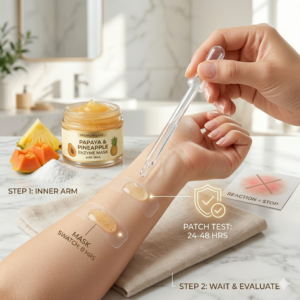 New mask? Please patch test first — especially if your skin leans sensitive or reactive.
Apply a small amount to your inner arm or behind your ear for 24–48 hours before going full-face. This is never excessive caution; it’s just smart self-care.
And if a product ever leaves your skin red, burning, or significantly tighter than before — that’s information. Your skin is talking. Listen to it.
Your Oily Skin Doesn’t Need to Be “Fixed”
Oily skin often gets treated like a flaw. Like something to be corrected or controlled at all costs.
But oily skin also tends to age more gracefully, hold hydration longer, and have a natural glow that people with dry skin genuinely envy.
The goal was never to erase your skin type. It was always to understand it well enough to work with it — and on the days when it cooperates? To enjoy the glow.
Using the right face masks for oily skin without drying is just one piece of that. A really satisfying piece, but still just one.
You’re not fighting your skin. You’re learning its language.
And that makes all the difference.
Have a favorite mask that doesn’t strip your skin? Drop it in the comments — this community runs on shared wisdom.
♥Continue Your Journey to Radiant Skin
If you enjoyed learning about this, you’ll find these curated guides essential for your 2026 beauty ritual:
| Article Title | Category | Quick Preview |
| Best Travel Skincare Sets: 5 Radiant Modular Swaps That Finally Work For Your Skin | Travel Skincare | Say goodbye to post-flight breakouts with these modular essentials. |
| 5 Best Ways to Remove Waterproof Makeup Without Dryness or Irritation — Your Ultimate 2026 Skin-First Guide | Sensitive Skin | Deep cleansing that respects your skin’s natural barrier. |
| 5 Radiant Reasons the Ultimate Rice Puree Travel Kit Is Your Carry-On Skincare Hero | Dry Skin | The secret to maintaining a glowing complexion at 30,000 feet. |
| Best Travel Skincare Sets: 5 Radiant Modular Swaps That Finally Work For Your Skin | Anti-Aging | Are your habits sabotaging your cells? Learn how to fix it today. |
| Dark Circles: 5 Shocking Night Habits Sabotaging Your Brightest Eyes (Fix Them in 7 Days) | Eye Care | A proven 7-day plan to restore brightness and banish fatigue. |
| Sakura Skin Care Set: 7 Powerful Secrets for Glowing, Confident Skin in Just Days | Skincare | Unlock the ancient power of Cherry Blossoms for a modern glow. |