
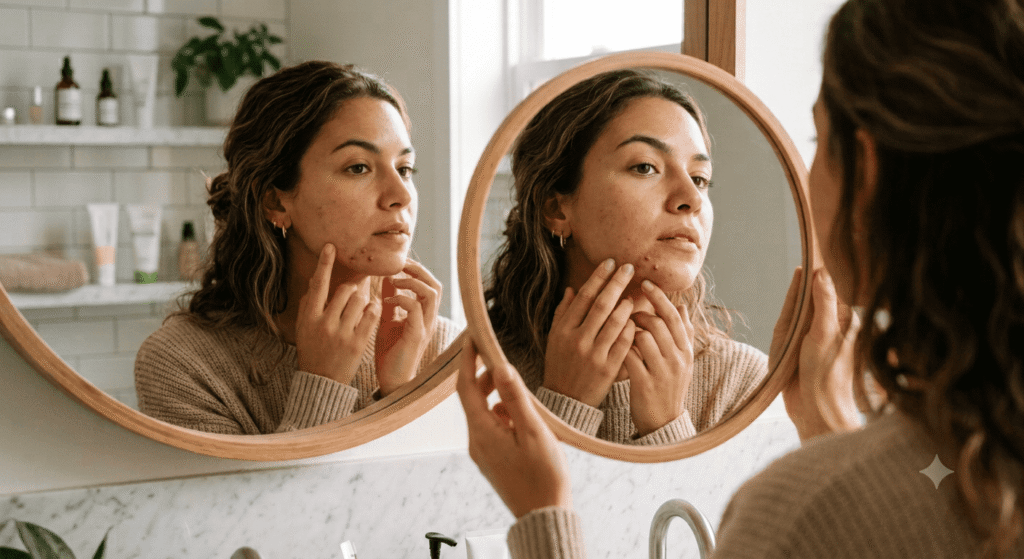
You did everything right. You survived the teenage breakouts, the harsh drugstore washes, the years of hiding under concealer. And then you turned 30 — and your skin decided to do it all over again.
If that sounds familiar, you’re not imagining things, and you’re definitely not alone. Adult acne in your 30s is more common than most people realize, and it can feel especially frustrating because it sneaks up right when you expected your skin to finally settle down. [American Academy of Dermatology – Adult Acne Statistics & Treatment]
Quick answer: Adult acne in your 30s is usually driven by hormonal fluctuations, slower skin cell turnover, stress, and product buildup in the pores. Unlike teenage acne, it tends to show up along the jawline and chin, and it often responds well to consistent use of salicylic acid, niacinamide, and retinoids alongside a gentler overall routine.
Why Is My Skin Still Breaking Out in My 30s?
There isn’t one single cause. Adult acne is usually a combination of a few things happening at once, and figuring out which ones apply to you is half the battle.
Hormonal Shifts
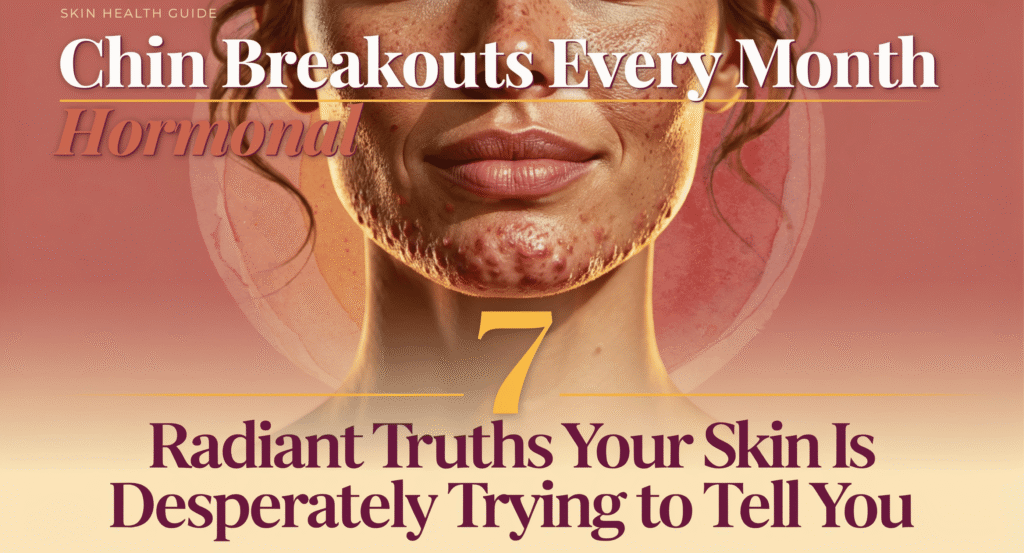
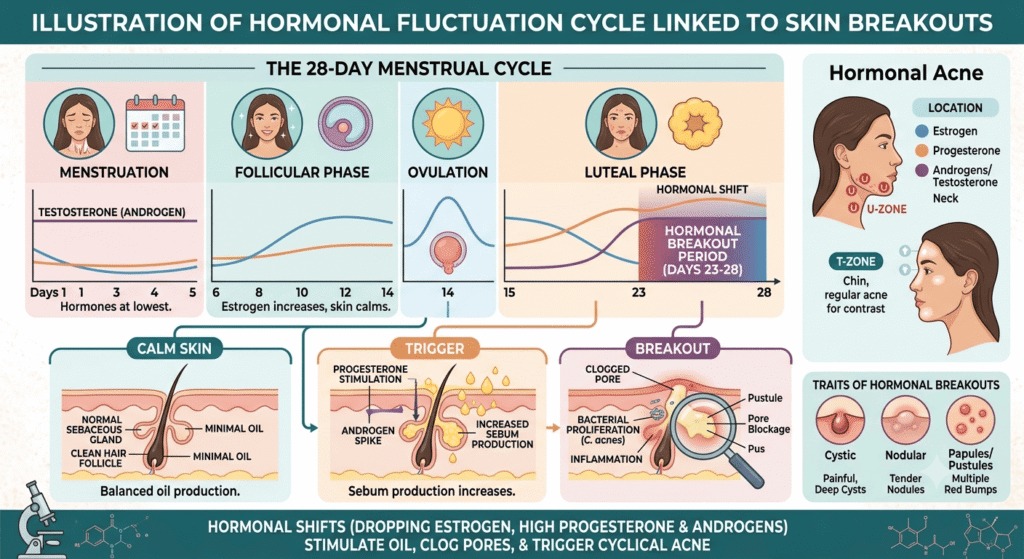
Estrogen and progesterone don’t stay perfectly steady through your 30s. Fluctuations tied to your cycle, coming off birth control, or approaching perimenopause can all trigger breakouts, especially along the jaw and chin. This is one reason so many women notice acne that flares around the same time every month.
Slower Skin Cell Turnover
In your 20s, skin sheds dead cells fairly efficiently. By your 30s, that process naturally slows down. Dead skin cells linger longer, mix with oil, and clog pores more easily than they used to.
Stress and Cortisol
Chronic stress raises cortisol, and cortisol can increase oil production in the skin. Between careers, relationships, and everything else your 30s throw at you, stress-related breakouts are incredibly common — and incredibly frustrating, because stressing about the acne only adds more stress.
Clogged Pores From Product Buildup
More makeup, more sunscreen, more “anti-aging” serums layered on top of each other — by your 30s, most people are using more products than they did as teenagers. Some of those ingredients (heavy oils, certain silicones) can clog pores if they’re not suited to your skin type.
Diet and Lifestyle Factors
Research suggests high-glycemic diets and dairy may worsen acne for some people, though the link isn’t the same for everyone. Sleep quality and hydration also play a supporting role, even if they’re not the root cause.For more information about the relationship between hormones and acne, see:
[PubMed – Hormonal Acne Research PubMed – Hormonal Acne Research]
Hormonal Acne vs. Teenage Acne — What’s Different?
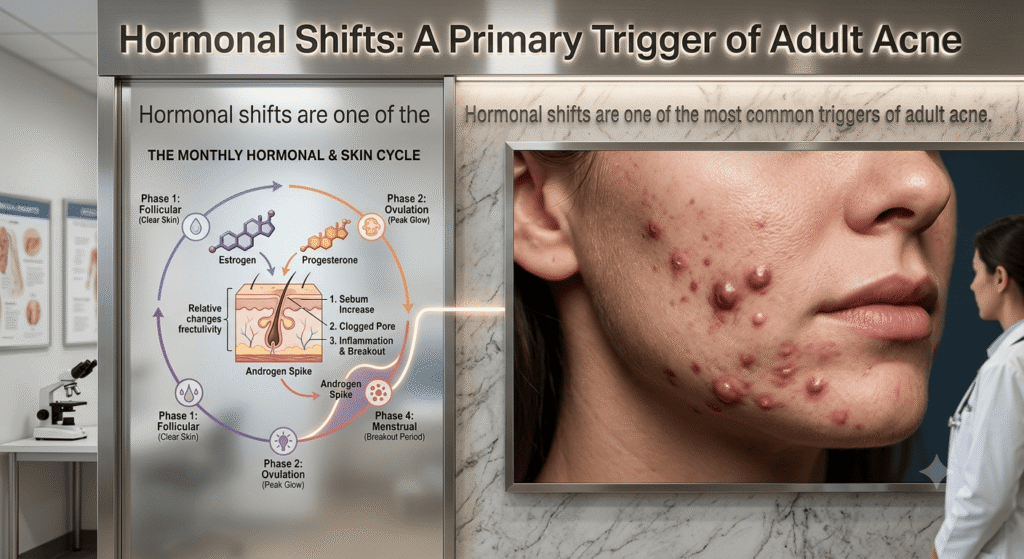
| Feature | Teenage Acne | Adult Hormonal Acne |
|---|---|---|
| Common location | Forehead, T-zone | Jawline, chin, lower cheeks |
| Skin texture | Often oilier overall | Can be oily in some areas, dry in others |
| Timing | Fairly constant | Often cyclical, tied to hormones |
| Typical trigger | Puberty, oil overproduction | Hormonal shifts, stress, slower cell turnover |
| Response to treatment | Often responds fast to basics | Usually needs consistency over 8–12 weeks |
Ingredients That Actually Help
Not every acne product is right for every skin type, and it’s worth knowing why each one works before you build a routine around it.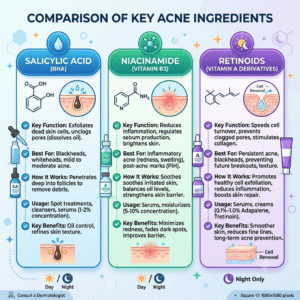
Salicylic Acid
A beta-hydroxy acid (BHA) that dissolves inside the pore, helping clear out oil and dead skin before they turn into a breakout. Best for oily or combination skin with blackheads and clogged pores. Can be drying for those with very sensitive or dry skin, so start with a lower concentration a few times a week.
Niacinamide
A form of vitamin B3 that helps calm inflammation, regulate oil production, and support the skin barrier. It’s gentle enough for most skin types, including sensitive skin, and pairs well with almost any other ingredient.
Retinoids
Vitamin A derivatives that speed up cell turnover and help prevent clogged pores before they form. Effective for most acne-prone adult skin, but they can cause dryness and mild irritation at first. Anyone who is pregnant or breastfeeding should avoid retinoids and speak with a doctor about safer alternatives.
| Ingredient | Best For | Skin Type | Texture | Timeline |
|---|---|---|---|---|
| Salicylic Acid | Blackheads, clogged pores | Oily, combination | Liquid, gel | 4–6 weeks |
| Niacinamide | Redness, oil control | All, including sensitive | Serum | 4–8 weeks |
| Retinoids | Turnover, texture | Most adult skin (not pregnancy) | Cream, gel | 8–12 weeks |
Pros: Backed by decades of dermatology research, widely available, effective long-term. Cons: Results take weeks, not days; overuse can cause irritation; not one-size-fits-all.
A Realistic Skincare Routine for Adult Acne
Morning Routine
- Gentle, low-pH cleanser
- Niacinamide serum
- Lightweight, non-comedogenic moisturizer
- Broad-spectrum SPF 30+
Night Routine
- Double cleanse if wearing makeup or sunscreen
- Salicylic acid treatment (2–3 nights a week to start)
- Retinoid (introduced slowly, alternating nights with salicylic acid)
- Barrier-repair moisturizer
Did you know? Applying retinoid and salicylic acid on the same night can be too much for adult skin. Many dermatologists recommend alternating them rather than layering both every night.
Common Mistakes That Make Adult Acne Worse
- Over-exfoliating in an attempt to “fix it fast,” which damages the skin barrier
- Switching products every week instead of giving one routine 8–12 weeks
- Skipping moisturizer because skin feels oily
- Picking at breakouts, which increases the risk of scarring
- Adding too many active ingredients at once
Expert Tips for Managing Breakouts in Your 30s
- Introduce one new active ingredient at a time, and wait a few weeks before adding another
- Keep a simple log of breakouts to spot hormonal patterns
- Choose “non-comedogenic” labeled products, especially for sunscreen and makeup
- Be patient — most acne ingredients take a full skin cycle (around 4–6 weeks) to show real change
When to See a Dermatologist
If breakouts are painful, cystic, leaving scars, or not improving after a few months of consistent care, it’s worth booking an appointment. A dermatologist can check for underlying causes and discuss prescription options that go beyond what over-the-counter products can do. Learn more: [For comprehensive, evidence-based recommendations on managing acne, refer to the AAD – Acne Treatment Guidelines. AAD – Acne Clinical Guideline]
FAQ
- Is adult acne in your 30s normal? Yes. Studies suggest roughly a third of women in their 30s experience some form of acne, so it’s far more common than most people assume.
- Why is my acne worse now than it was as a teenager? Adult acne is often driven by hormonal shifts and slower cell turnover rather than the oil overproduction typical of teenage acne, which is why it can feel different and, in some cases, more stubborn.
- Can stress really cause breakouts? Stress can raise cortisol levels, which may increase oil production and inflammation, making existing acne worse or triggering new breakouts.
- Should I use retinol or salicylic acid first? Neither is strictly “first” — many people alternate them on different nights to avoid over-irritating the skin, then adjust based on how their skin responds.
- Is niacinamide enough on its own for adult acne? Niacinamide helps with oil control and inflammation, but it usually works best combined with an exfoliating ingredient like salicylic acid or a retinoid for more stubborn breakouts.
- Can diet affect adult acne? Some research links high-glycemic foods and dairy to worsened acne in certain people, though the relationship varies and isn’t the same for everyone.
- How long until I see results from a new routine? Most acne ingredients need 8–12 weeks of consistent use before you can fairly judge whether they’re working.
- Is it okay to wear makeup with adult acne? Yes, as long as products are labeled non-comedogenic and makeup is removed thoroughly at the end of the day.
Summary
Breaking out in your 30s doesn’t mean you’re doing something wrong — it usually means your skin is responding to hormones, stress, or slower turnover in ways that are completely normal, even if they don’t feel that way in the mirror. The good news is that ingredients like salicylic acid, niacinamide, and retinoids have real research behind them, and a simple, consistent routine tends to beat a complicated one every time.
Ready to build a routine that actually fits your skin? Start with one new active ingredient this week, give it a full skin cycle, and take a photo on day one so you can actually see the progress you’re making.