
You’re not alone in that feeling — and here’s the thing nobody tells you: it’s rarely about the product you haven’t tried yet. More often, it’s about something invisible, something alive, living right on your skin’s surface.
In 2026, the smartest shift in beauty isn’t a new serum or a fancy tool. It’s the understanding that your skin hosts a living community of bacteria, fungi, and microorganisms — your skin microbiome — and when that community thrives, your skin genuinely glows. Not a filter-glow. A real, healthy, from-within glow.
Let’s walk through seven science-backed secrets that will change how you think about your skin forever. Not rules. Not a strict routine. Just a gentler way forward.
What Is the Skin Microbiome? Your Secret Garden
Picture your skin as a living planet. On its surface, billions of tiny organisms — bacteria, fungi, even viruses — exist in a careful, cooperative balance. Together, they form your skin microbiome.
Far from being something to scrub away, these organisms are your skin’s first line of defense. They help maintain the skin’s natural pH (around 5.5), produce natural antimicrobials that fight harmful pathogens, and reinforce the protective barrier that keeps moisture in and irritants out.
According to a 2025 review published in the National Center for Biotechnology Information, disruptions to this microbial community are closely linked to inflammatory skin conditions including acne, rosacea, eczema, and premature aging.
Think of it this way: a healthy microbiome is like a well-tended garden. Strip the soil of everything — nutrients, organisms, life — and nothing grows back the way it should. Your skin is the same.
Reading Your Skin’s Signals: When the Microbiome Is Off
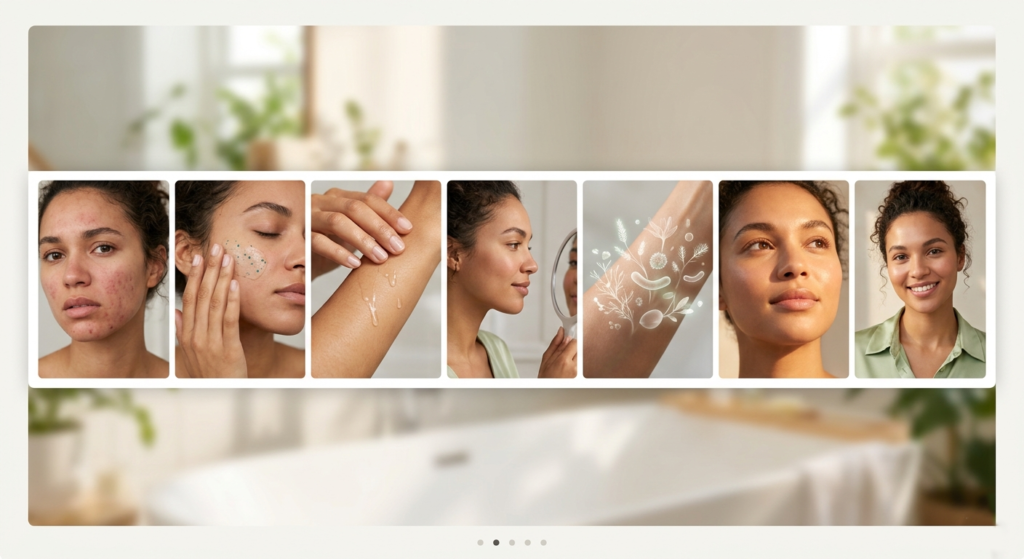
Your skin doesn’t complain with words. It complains with breakouts, tightness, and that inexplicable dullness that no highlighter fixes. Here are the clearest signals that your microbiome needs some love:
- Sudden sensitivity — new products sting or redden skin that was fine before
- Breakouts in unusual places — or acne that persists despite standard treatments
- Chronic dryness — skin that drinks moisturizer but stays thirsty an hour later
- Loss of natural glow — a flat, dull appearance that concealer can’t quite fix
- Flare-ups of rosacea or eczema — that seem to worsen despite careful routines
- Oily-then-dry cycles — skin that can’t seem to regulate itself
None of these are flaws. They’re invitations — your skin asking you to change something, to listen a little closer.
Why 2026 Is the Year of Microbiome-First Beauty
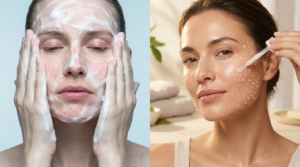 Something genuinely shifted in how we think about skincare. We stopped believing “stronger = better.” We started questioning whether that foaming cleanser leaving our skin “squeaky clean” was actually… good for us.
Research published in Wiley’s Journal of Cosmetic Dermatology shows that microbiome-targeted formulations are no longer experimental — they’re becoming the standard for brands that care about long-term skin health over short-term visual results.
This isn’t a trend with an expiry date. It’s a fundamental rethink. And you’re here at exactly the right moment.
Secret 1
The Art of Gentle Cleansing
Goodbye to the Squeaky-Clean Lie
The biggest act of self-sabotage most of us commit daily? Over-cleansing. That thick foam that leaves skin feeling “clean” is stripping away the very organisms and oils that protect you.
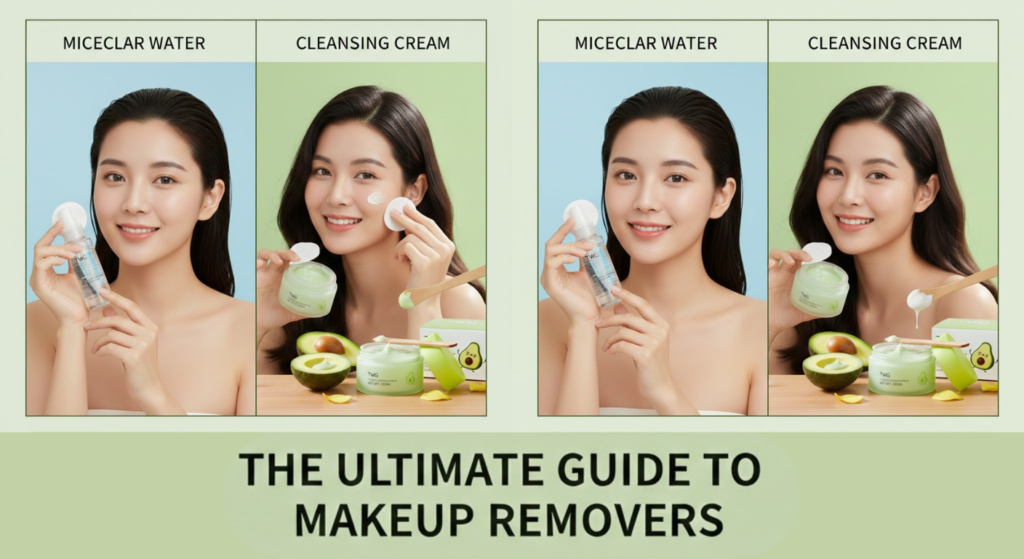
- Switch to an oil or milk cleanser — they dissolve impurities without disrupting the barrier
- Check that your cleanser is pH-balanced at or near 5.5 — your skin’s natural zone
- Use lukewarm water only — hot water inflames and dries; cold doesn’t cleanse properly
- Cleanse once daily if your skin is dry or sensitive — morning rinse with water is often enough
The goal of cleansing is to remove what shouldn’t be there — not to sterilize what should.
Secret 2
Probiotics & Prebiotics for Your Skin
Nourishing the Invisible Community
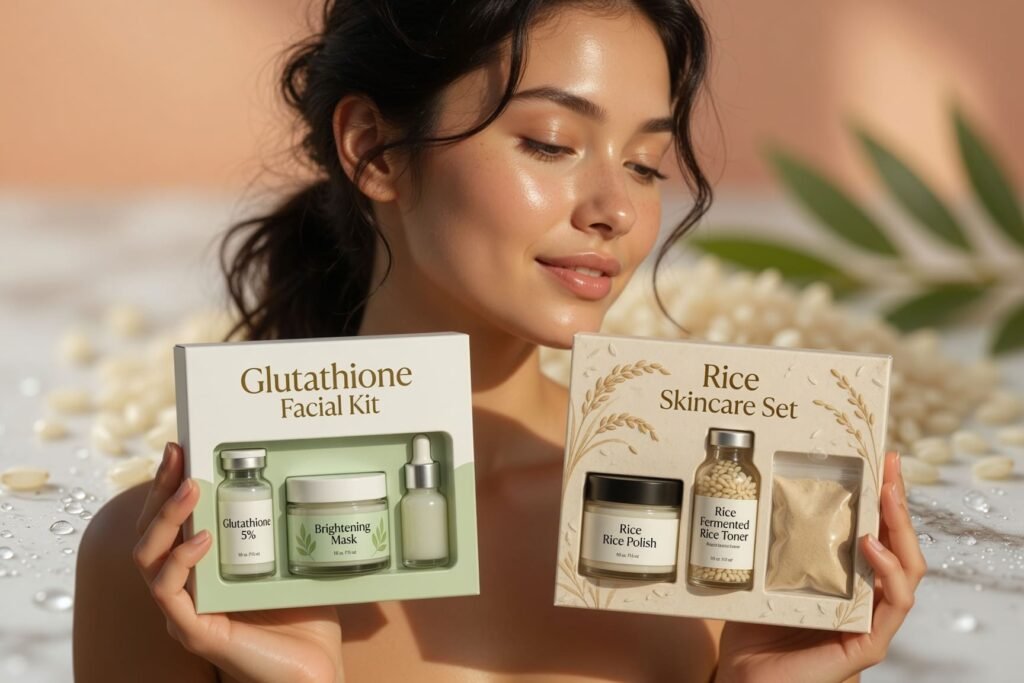
Just as fermented foods feed the gut microbiome, certain skincare ingredients actively nourish the skin’s microbial community. In 2026, these are the three categories to look for:
- Prebiotics
- Probiotics (topical)
- Postbiotics
- Inulin
- Lactobacillus ferment
- Beta-glucan
- Amino acids
- Lactic acid (low %)
Prebiotics act as fertilizer — they feed the good bacteria already living on your skin. Probiotics introduce beneficial bacteria to restore lost balance. Postbiotics are the beneficial byproducts bacteria produce — amino acids and enzymes that calm inflammation and repair the barrier almost immediately.
Look for products that clearly list one of these categories on the label, not just vague “microbiome-friendly” claims. Specificity is the sign of a trustworthy formula.
Secret 3
Ceramides: Rebuilding the Inner Fortress
The Foundation the Microbiome Lives On
Even the healthiest microbiome can’t do its job if the skin barrier itself is compromised. Ceramides are the lipid molecules that act as the “mortar” between your skin cells — sealing moisture in and keeping irritants out.
A 2024 study in the Journal of Cosmetic Dermatology highlighted that barrier-repair moisturizers containing a blend of ceramides, cholesterol, and fatty acids produce more consistent long-term improvements than single-ingredient hydrators.
- → Look for the trio: ceramides + cholesterol + essential fatty acids
- → Apply while skin is still slightly damp — absorption is significantly better
- → Use consistently for 6–8 weeks before assessing results — barrier repair is gradual
Secret 4
Smart Hydration, Not Heavy Hydration
Light, Breathable, and Actually Effective
The myth of “the richer the cream, the more hydrated the skin” is one the microbiome simply can’t support. Heavy occlusive creams can suffocate the skin surface, disrupting the oxygen and environment that beneficial microorganisms need.
Instead, reach for ingredients that mimic the skin’s own moisture naturally:
- Hyaluronic acid
- Glycerin
- Squalane
- Panthenol (B5)
- Aloe vera
- Polyglutamic acid
These “smart” humectants draw moisture into the skin without creating a suffocating film. The result? Skin that looks plump, feels comfortable, and lets the microbiome breathe.
Hydration that works with your biology will always outlast hydration that ignores it.
Secret 5
The Mind-Gut-Skin Connection
Stress Shows Up on Your Face First
Have you ever woken up with a breakout the morning after a hard week? That’s not coincidence — it’s biology. Chronic stress triggers cortisol release, which directly disrupts the skin microbiome and promotes inflammatory responses across the skin.
Caring for your microbiome means caring for yourself — genuinely, not performatively:
- → Add fermented foods (yogurt, kefir, kimchi) to your diet — gut health reflects directly on skin
- → Treat your evening skincare as a slow ritual, not a quick task — the mindfulness matters
- → Prioritize sleep — cortisol regulation and skin repair both happen primarily during deep sleep
- → Add dietary fiber — prebiotic foods feed the gut, which signals calm to the skin
This isn’t woo-woo wellness advice. The gut-brain-skin axis is well-documented science, and it’s one of the most underutilized levers in any skincare routine.
Secret 6
 Conscious Exfoliation — Less Really Is More
 Conscious Exfoliation — Less Really Is More
Stop Scrubbing Away Your Skin’s Defense
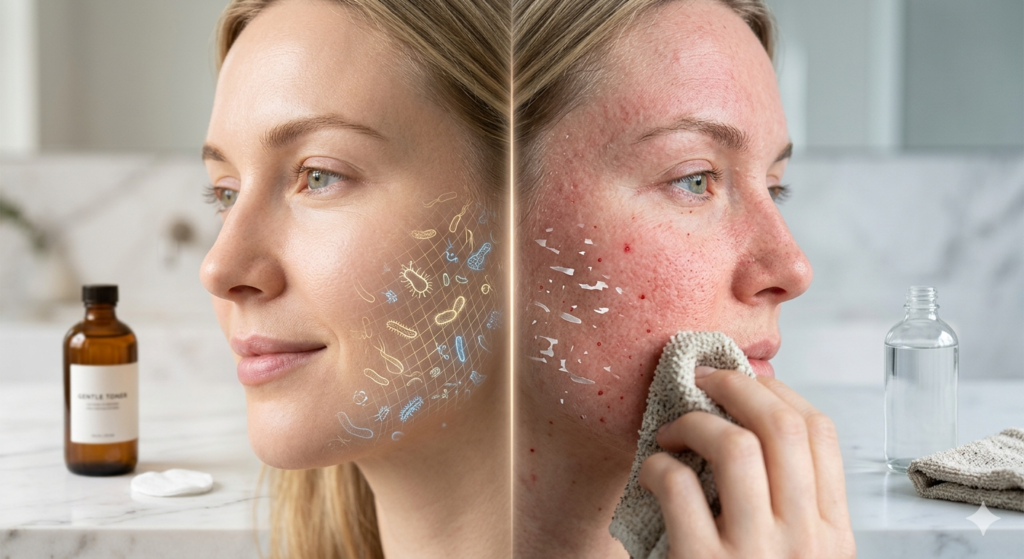
Exfoliation has a reputation problem. Done well, it brightens, smooths, and accelerates cell turnover. Done too aggressively — which most of us do — it’s one of the fastest ways to destabilize the microbiome.
High-concentration glycolic acid used daily doesn’t just remove dead cells. It disrupts the pH, kills beneficial bacteria, and leaves skin vulnerable for hours after application.
In 2026, the smarter approach looks like this:
- → PHAs (polyhydroxy acids) — gentler than AHAs, ideal for sensitive or reactive skin
- → Mandelic acid — larger molecular size means slower, safer penetration
- → Enzyme exfoliants (papaya, pineapple) — dissolve dead cells without disrupting live ones
- → Frequency: twice weekly maximum for most skin types; once weekly for sensitive
Secret 7
Shielding Against Modern Environmental Stress
Blue Light, Pollution, and the Antioxidant Arsenal
Our skin now faces threats it genuinely didn’t evolve to handle: blue light from screens, fine-particle atmospheric pollution, and UV exposure on surfaces that were once shielded. All of these generate free radicals that attack the skin microbiome along with skin cells themselves.
Antioxidants are your microbiome’s protective shield:
- Niacinamide (B3)
- Vitamin C (stable form)
- Vitamin E
- Resveratrol
- Green tea extract
- Ferulic acid
Niacinamide deserves special mention — it regulates sebum, calms redness, strengthens the barrier, and shows emerging evidence of supporting a balanced microbiome environment. It’s the multitasker your routine probably already needs.
Routine Comparison
| Category | Traditional (Harsh) Routine | Microbiome-Supportive Routine |
|---|---|---|
| Cleanser | Foaming, high-sulfate, alkaline pH | Oil or milk cleanser, pH ~5.5 |
| Exfoliation | Harsh scrubs or high-% AHAs daily | PHAs or enzymes, twice weekly max |
| Key Ingredients | High-% retinol, strong acids | Probiotics, ceramides, postbiotics |
| Hydration | Heavy occlusives applied on dry skin | Humectants on damp skin + light sealant |
| Goal | “Fight” imperfections, strip the skin | Nourish the skin, support natural balance |
| Typical Result | Quick improvement, then rebound sensitivity | Gradual, lasting, consistently radiant skin |
Your skin isn’t a problem to solve. It’s a living system to support.
Caring for your microbiome isn’t about buying more or doing more — it’s about doing less, more thoughtfully. One gentle cleanser swap. One moment of slow, intentional application. One less aggressive acid treatment.
Start there. Your skin will find its way back to balance — and you’ll recognize it when it does. Not because it looks different. Because it feels like you again.
With love and a lot of SPF,
Your Beauty Friend
♥ Continue Your Journey to Radiant Skin
If you enjoyed learning about this, you’ll find these curated guides essential for your 2026 beauty ritual:
| Article Title | Category | Quick Preview |
| Best Travel Skincare Sets: 5 Radiant Modular Swaps That Finally Work For Your Skin | Travel Skincare | Say goodbye to post-flight breakouts with these modular essentials. |
| 5 Best Ways to Remove Waterproof Makeup Without Dryness or Irritation — Your Ultimate 2026 Skin-First Guide | Sensitive Skin | Deep cleansing that respects your skin’s natural barrier. |
| 5 Radiant Reasons the Ultimate Rice Puree Travel Kit Is Your Carry-On Skincare Hero | Dry Skin | The secret to maintaining a glowing complexion at 30,000 feet. |
| Best Travel Skincare Sets: 5 Radiant Modular Swaps That Finally Work For Your Skin | Anti-Aging | Are your habits sabotaging your cells? Learn how to fix it today. |
| Dark Circles: 5 Shocking Night Habits Sabotaging Your Brightest Eyes (Fix Them in 7 Days) | Eye Care | A proven 7-day plan to restore brightness and banish fatigue. |
| Sakura Skin Care Set: 7 Powerful Secrets for Glowing, Confident Skin in Just Days | Skincare | Unlock the ancient power of Cherry Blossoms for a modern glow. |